Read about cancer colorectal xeloda here

Posts tagged: isotretinoin

Feb 06 2010

Judge Overturns Decision to Exclude Me from Accutane & Suicide Litigation

On Thursday an appellate court in New Jersey reversed the decision to let me testify in the case of Palazzolo v Hoffman La Roche, although they upheld the decision to not permit the results of our brain imaging study showing that Accutane affected function of the orbitofrontal cortex. In doing so they correctly noted that the results of the imaging study were just one part of the body of evidence needed to conclude that Accutane can cause depression, not the linchpin of the argument, as the prior judge had noted.

This announcement caused an outpouring of vitriol (e.g. calling my study “faked” and “junk science”), first from lawyers working on behalf of pharma and device makers, writing in the Drug and Device Law blog, then from an MD who works as writer and marketer for pharma and pharma-sponsored CME. I felt I need to set the record straight on a number of points that were made.

First of all, it is not true that the study was “commissioned for the litigation”. Eighty percent of the study was paid for by money donated by Liam Grant of Ireland. Brain scans aren’t free. Roche refused to do a study. In fact, back in 1999, I met personally with John McLane, who unbenownst to me was a senior executive for Roche at the time, who refused to even provide medication for the study. I am not an expert in Liam Grant’s litigation (in Ireland you cannot get more than $50,000 in litigation, so he is hardly doing it for the money). I agreed to be an expert after the study was done, not before. Half of all research is supported by pharma. They “commission” research to serve their marketing goals all the time. The bias that introduces has been well documented. When a study is done that is not controlled by them, they go bananas.

Some of the missing data referred to as “bmax” was actually an erroneous term introduced in the course of the 15 depositions (8 hours each) I went through with Roche over this study. The inability to retrieve the numbers was temporary due to problems accessing old media (not an uncommon problem in imaging research). By the time the data was retrieved a court deadline had passed. But it is inaccurate to imply that they were never retrieved.

The reference to not following the study methodology refers to a questionnaire about satisfaction with skin condition (called the Skindex) that was not part of the original protocol, and that was added late, and was not the primary focus of the study.  The original article stated that it was given before and after treatment, but the after treatment results were not presented. As I wrote in a correction later the questionnaire was not given to all of the subjects after treatment.

Roche spent a lot of time and effort trying to debunk this study, in the course of which some data entry errors were found. A re-analysis of the study with corrected data continued to show a reduction in function of the orbitofrontal brain function, in fact the results were more statistically significant than before. Roche next accused me of fraud and asked the journal to retract the paper, which led to an inquiry at my university where the committee had access to all the data and legal documents, and cleared me of the charges of fraud, recommending a letter of correction based on the corrected data, which led to this single sentence correction published in the journal.

The conclusion that Accutane can cause depression shouldn’t rest on a single study, which it doesn’t, as the evidence that retinoids play a role in affective disorders continues to grow.

Jan 28 2009

Are Dermatologists Dippy? The Depressing Accutane Tale

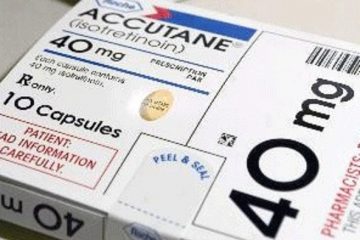
Rather than admit that one of their silver bullets, Accutane (isotretinoin), which was a “goose laying the golden egg” for F. Hoffmann-La Roche Pharmaceuticals (and their various “Roche” associates world-wide) to the tune of a billion dollars a year, could make kids depressed or kill themselves or cause grotesque birth defects in the kids of over half of women exposed when pregnant, dermatologists have sung themselves a lullaby that their magic pills don’t make kids depressed, they actually make them better, by clearing up those ugly zits that drive them to despair. In what can only be described as a tragic collusion of conflicts of interest (COI) amongst their Key Opinion Leaders (KOLs) and willful denial amongst the lowly rank and file, they have decided to say “What? Me Worry?”

When the heat got turned up on Roche Pharmaceuticals after the son of Congressman Bart Stupak’s (D-Mich) son Bart Jr. died of suicide while on Accutane in 2000, they got busy and called a “Scientific Advisory Board” meeting at the Ritz Carlton in Alexandria, Virginia, to opine on the topic of the relationship between Accutane treatment and depression. This meeting included figures from psychiatry like Kathleen Merikangas, PhD, Stuart Montgomery, PhD, and David Nutt, MD, Chair of Dermatology David Bickers MD, and psychiatrist Douglas Jacobs, MD. Between the lot of them I think they have written about one paper total in the literature on the subject. But they did get paid a nice consulting fee for their efforts, of course.

Accutane and depression

Their conclusion? No relationship, of course.

I wasn’t aware you were an Accutane expert, Kathleen!

I challenge them all to a debate. I’ll fight them with one hand behind my back!

Fact is Accutane’s efficacy for acne was discovered a decade before Roche put a patent on it, in a paper in the New England Journal of Medicine.

I have communicated with two of the authors, both dermatologists, Frank Yoder MDand Gary Peck, MD.

Both of them agreed with my opinion that Accutane can cause depression in some individuals.

What is really sad about this whole sordid tale is how degenerated the so-called dermatology “literature” has become on the topic.

For example, the most commonly cited study to support the statement that acne is associated with depression, a study that has been cited several hundred times by dermatologists writing in the literature, involved only ten patients with acne and no comparison subjects (Gupta et al., 1990). No statistics were performed (obviously since there was no comparison group). Scores on the questionnaires for anxiety and depression were not related to severity of acne.

And the fact is that the rest of the literature isn’t any better. Objective measures of acne do not correlate with severity of anxiety or depression. Acne does not cause major depression. It is simple as that.

Sure, kids worry about their zits and feel better when they go away, but the studies do not support the conclusion that acne causes major depression, and that treatment of acne cures depression.

In spite of this the manufacturer of Accutane, Hoffmann-LaRoche, has consistently downplayed the risks of suicide and depression and has denied a causal association (McCoy, 2004). The dermatology community has joined with the manufacturer in praising the merits of this medication for the treatment of acne which they describe as the “penicillin of dermatology”. It took only 10 months for the FDA to approve Accutane for the treatment of cystic and nodular acne in May of 1982, however controversy has followed it from the time of its initial launch. In January of 1983 one of the authors of the first paper to describe the use of isotretinoin for the treatment of acne in 1977, Dr. Frank Yoder, wrote about the potential dangers of Accutane (Yoder, 1983). In 1990 Dr. David Graham of the FDA highlighted the inability of the Dermatological Medications Advisory Committee to the FDA to be impartial since it was made up entirely of dermatologists (Green & Hutt, 2002). At that time he stated that Accutane should be taken off of the market, mainly because of the risk of birth defects. Indeed its use has always been curtailed or highly restricted in European countries, unlike the US where it is often prescribed for minor blemishes. Strong feelings about the utility of isotretinoin for the treatment of acne in the dermatology community, and forceful marketing by the manufacturer in the US, have caused a delay in awareness of the potential risks in the US. In 1998, the year that the FDA first approached Hoffmann-LaRoche about adding a warning related to suicide with Accutane to its label, the manufacturer ran an ad that stated, “Effective treatment of severe recalcitrant nodular acne minimizes progressive physical scarring, as well as negative psychosocial effects such as depression and poor self image” (Green & Hutt, 2002). This was in spite of the fact that less than half of patients prescribed the medication actually had nodular acne. The FDA required that Hoffman-LaRoche pull the ad.

In 2000 Congressman Bart Stupak’s son, Bart Jr., committed suicide while on Accutane. Congressman Stupak called for congressional hearings on the safety of the drug and in September of that year the FDA called a Dermatologic Advisory Committee meeting on the topic. In November of 2001 an educational grant from Roche funded a supplement of the Journal of the American Academy of Dermatology on isotretinoin which followed the Scientific Advisory Board Meeting in Alexandria VA they held on the topic. The basic science-related articles focused on retinoids and the skin, essentially ignoring the large extant literature on retinoids and the central nervous system. Psychiatric side effects merited literally two sentences, and one article, written by one of Roche’s hired guns, stated that there was no evidence for any association (Jacobs et al., 2001), ignoring the reported challenge-rechallenge cases which have been cited in the pharmacoepidemiology literature as adequate in and of themselves to establish causality (Strom, 2005). This led members of the FDA to write a letter of response, “in the interest of public health,” admonishing the authors of these articles for the short shrift they paid to the issue of Accutane and psychiatric side effects (O’Connell, Wilkin, Pitts, 2002).

The degree to which dermatologists have thrown science and logic out of the window in order to protect their magic bullet is simply remarkable. For instance in a 2004 article entitled “Myths of Isotretinoin Therapy” (Alcalay, 2004) “isotretinoin causes depression and suicide attempts” was listed as a “myth”. The article went on to state that any risk needed to be “weighed against the increasing prevalence of depression among adolescents and young adults and the psychological impact of acne.” [In fact, depression is not increasing amongst teenagers and acne has not been associated with clinical depression, rather only changes in self esteem].

Here are some authentic mythic figures for you, Dr. Alcalay! And they don’t have any pharmaceutical industry COIs!

Mythic figures

Aktan, S., Ozmen, E., Sanli, B. (2000). Anxiety, depression, and nature of acne vulgaris in adolescents. International Journal of Dermatology, 39, 354-357.

Alcalay, J. (2004). Myths of isotretinoin therapy in patients with acne: A personal opinion. Journal of Drugs in Dermatology, 3(2), 179-182.

Green, J., Hutt, P. (2002). Babies, blemishes, and FDA: A history of Accutane regulation in the United States., Leda. Cambridge, MA.

Gupta, M. A., Gupta, A. K., Schork, N. J., Ellis, C. N., Voorhees, J. J. (1990). Psychiatric aspects of the treatment of mild to moderate facial acne: Some preliminary observations. International Journal of Dermatology, 29(10), 719-721.

Jacobs, D. G., Deutsch, N., Brewer, M. (2001). Suicide, depression, and isotretinoin: Is there a causal link? Journal of the American Academy of Dermatology, 45, S168.

Kellett, S. C., Gawkrodger, D. J. (1999). The psychological and emotional impact of acne and the effect of treatment with isotretinoin. British Journal of Dermatology, 273-282.

McCoy, K. (2004, December 7, 2004). Drug Maker rebuffed call to monitor users. USA Today, pp. 1-2.

O’Connell, K. A., Wilkin, J. K., Pitts, M. (2002). Isotretinoin (Accutane) and serious psychiatric adverse events. Journal of the American Academy of Dermatology, 48(2), 306-307.

Shuster, S., Fisher, G. H., Harris, E., Binnel, D. (1978). The effect of skin disease on self-image. British Journal of Dermatology, 99(Suppl 16), 18-19.

Smithard, A., Glazebrook, C., Williams, H. C. (2001). Acne prevalence, knowledge about acne and psychological morbidity in mid-adolescence: a community-based study. British Journal of Dermatology, 145, 274-279.

Strom, B. L. (Ed.). (2005). Pharmacoepidemiology (4 ed.). New York: Wiley.

Van der Meeren, H. L. M., van der Schaar, W. W., van den Hurk, C. M. A. M. (1985). The psychological impact of severe acne. Cutis, 36(1), 84-86.

Wu, S. F., Kinder, B. N., Trunnell, T. N., Fulton, J. E. (1988). Role of anxiety and anger in acne patients: Relationship with the severity of the disorder. Journal of the American Academy of Dermatology, 18, 325-333.

Yoder, F. W. (1983). Isotretinoin: A word of caution. Journal of the American Medical Association, 249(3), 350-351.


Originally posted Jan 5 2008

WordPress Themes

Content recommendations from Evri